A Timeless Tool: CO2 Lasers in Material Processing
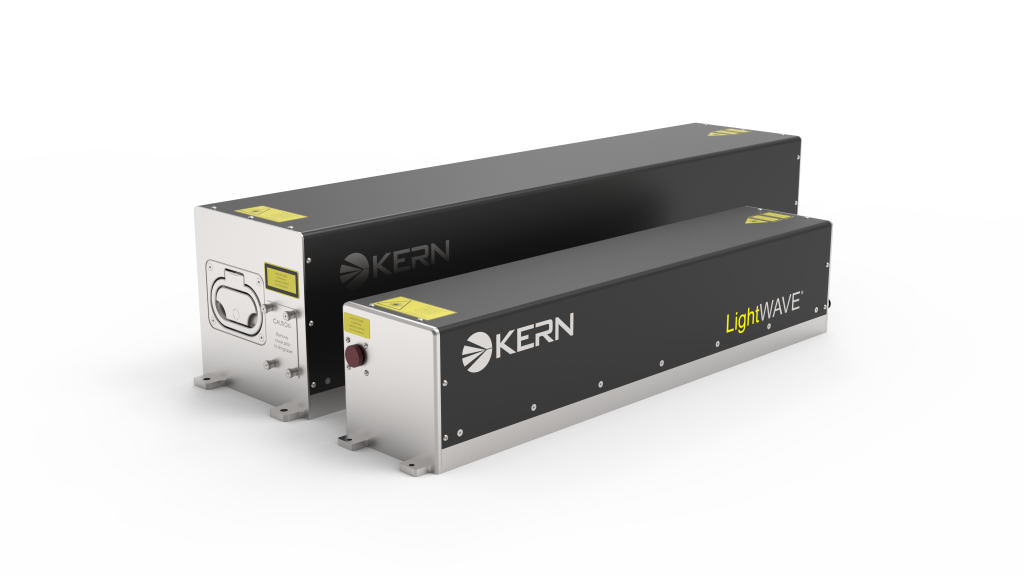
The Carbon Dioxide (CO2) laser has played a pivotal role in industrial and medical applications for decades. This article provides an overview of its development and explores why it remains an essential tool in various fields. From its invention to its diverse applications, the CO2 laser has proven to be a workhorse in material processing.
The Invention and Early Development
The carbon dioxide (CO2) laser was one of the earliest gas lasers to be developed. It was invented by Kumar Patel at Bell Labs in 1964 and quickly became one of the most widely used types of lasers and acted as a landmark in early laser technology while still remaining highly releveant today.
Design and Functionality
The fundamental structure of a CO2 laser consists of a gas discharge chamber with a total reflector at one end and a partially reflecting mirror as an output coupler. These lasers can operate in pulsed mode, continuous-wave (CW) mode and quasi-continuous-wave (QCW) mode, ranging from milliwatts to hundreds of kilowatts, making them suitable for various applications. Additionally, advancements in laser technology have enabled improved pulse control and modulation techniques, allowing for greater precision in cutting, engraving, and welding applications.
Industrial Applications
Western Electric introduced the first production-oriented laser in 1965, utilizing it to cut holes in diamond dies and highlighting its industrial potential. By 1967, advancements in CO₂ laser technology enabled outputs exceeding 1,000 watts, establishing it as a powerful tool for cutting and engraving various materials. In 1969, The Boeing Company became the first to adopt gas laser cutting for commercial use, showcasing its precision and economic benefits in manufacturing.
As industries adapted to laser material processing, several companies began commercializing the technology. Innovations such as slow-flow lasers, which recirculated the gas mixture through the lasing area, improved efficiency and reliability. By using longer discharge tubes and folding mirrors, these lasers could achieve outputs of over 1,000 watts, despite their large size and complex maintenance requirements.
Today, CO2 lasers are extensively used in multiple industries, including automotive, aerospace, textile, packaging and many more. They are instrumental in processing plastic, rubber, glass, wood, and composite materials. Their ability to provide high precision and clean cuts makes them ideal for applications such as laser engraving, marking, cutting, drilling, and welding. In the automotive industry, CO2 lasers help manufacture critical components by precisely cutting and marking vehicle interior materials, ensuring high production efficiency and minimal waste. Similarly, in the aerospace sector, CO2 lasers are used for machining advanced composite materials that require precise thermal processing.
In the textile industry, CO2 lasers are employed for intricate fabric cutting and engraving, replacing traditional mechanical tools and enabling more efficient production processes. Additionally, packaging industries leverage CO2 lasers for high-speed marking and perforation of paper, plastics, and films, ensuring product traceability and enhancing aesthetic appeal. The continued development of CO2 laser technology has expanded its capabilities, making it an indispensable tool in modern industrial applications.
Advancements and Medical Applications
Beyond industrial use, CO2 lasers revolutionized medical procedures. Their ability to produce precise incisions with minimal thermal damage made them ideal for dermatological applications, such as skin resurfacing and acne treatment. One of their key attributes is hemostasis, allowing surgeons to operate in a nearly bloodless field.
The development of sealed CO2 lasers further improved their reliability, making them suitable for medical and semiconductor applications. These radio-frequency (RF)-excited sealed lasers featured high-speed modulation capabilities, enabling extreme precision in marking, cutting, and perforation of materials like paper and plastics in machines capable of On-The-Fly processing.
Competition with Fiber Lasers
Until the early 2000s, CO₂ lasers were the leading technology for material processing, with power outputs reaching up to 100 kW. They were widely adopted in flatbed metal cutting machines and robotic applications. The arrival of fiber lasers, with their shorter 1-micron wavelength, brought advantages for metal processing—enabling more efficient coupling with reflective metals and offering flexible fiber delivery for easier integration and lower maintenance.
Despite these advancements, CO₂ lasers remain a uniquely versatile tool, capable of cutting not only metals but also a wide range of non-metallic materials such as plastics, wood, textiles, and composites. Their 10-micron wavelength is highly absorbed by organic and non-metallic materials, making them essential in industries where diverse material processing is required. Importantly, CO₂ lasers offer the distinct advantage of handling both metals and non-metals on a single machine, eliminating the need for multiple specialized systems. This versatility makes CO₂ lasers an irreplaceable choice for manufacturers seeking flexibility, precision, and broad material compatibility in one platform.
The Future of CO2 Lasers
While fiber lasers have gained prominence, CO2 lasers continue to be refined and improved. Kern Technologies is a leader in CO2 laser development and manufacturing, ensuring this technology continues to evolve and find new applications in various industries.
The CO2 laser, often considered a timeless technology, remains a powerful tool in material processing, offering unique advantages that newer technologies cannot fully replace while continuing to find new and innovative applications.


